
Several Indian real estate companies, including BPTP Ltd and Smartworld Developers, are rethinking or shelving their initial public offering (IPO) plans, which were expected to raise around 15,000 crore, due to weaker housing demand, higher costs, and a more cautious investment climate.

'We can integrate AI and tech into education, but that is just a means and not an end.' 'Ultimately, we need to control what happens in a classroom and we need to let teachers innovate their teaching style to suit the needs of Gen Z and beyond.'

Larsen & Toubro (L&T) is investing Rs 5,000 crore over five years to enter the automotive components sector, focusing on electric vehicle (EV) motors, safety systems, and connected-vehicle technologies, aiming to become a Tier-I auto supplier.

Nasa astronaut Anil Menon, along with Russian cosmonauts Pyotr Dubrov and Anna Kikina, has embarked on an eight-month mission to the International Space Station (ISS) aboard a Soyuz MS-29 spacecraft, lifting off from Kazakhstan.

Indian benchmark indices, Sensex and Nifty, recorded their fifth consecutive day of losses, driven by investor caution over rising oil prices due to West Asia tensions and renewed concerns regarding US trade tariffs.

The Centre for Studies of International Relations (CSIR) has established the International Centre for Civilizational Studies "Manas and Mahabharata" in Bishkek, Kyrgyzstan, in collaboration with the Manas National Academy. The inauguration also saw the release of the first Hindi translation of the Kyrgyz epic "Manas," aiming to foster scientific, educational, and cultural cooperation between India and Kyrgyzstan.

Young adults in India are increasingly grappling with high blood pressure, a condition once thought to affect mainly the older demographics. Cardiologists point to sedentary lifestyles, obesity, chronic stress and unhealthy diets as primary drivers of this silent epidemic.

Shares of major private lenders, including HDFC Bank, Axis Bank, and Kotak Mahindra Bank, experienced a sharp selloff after their June-quarter results indicated persistent pressure on net interest margins (NIMs), despite healthy credit growth. This decline overshadowed gains in ICICI Bank and Punjab National Bank (PNB), which reported resilient or stronger-than-expected earnings.

Analysts predict that the US-Iran geopolitical conflict, upcoming quarterly earnings announcements, and fluctuations in crude oil prices will be the primary drivers of investor sentiment in the Indian equity markets.

Indian benchmark indices, Sensex and Nifty, closed almost unchanged due to profit-taking in blue-chip stocks, geopolitical uncertainties, fluctuating oil prices, and weak Asian market trends, despite cooling US inflation offering some support.

Indian benchmark indices, Sensex and Nifty, closed lower due to significant selling in HDFC Bank and Axis Bank shares, driven by margin-related concerns and escalating US-Iran tensions, which also pushed crude oil prices higher.

India's wholesale price inflation (WPI) increased to 9.87 per cent in June, up from 9.68 per cent in May, primarily due to significant price increases in non-food and food products, with food inflation alone rising to 5.49 per cent.

Indian benchmark indices, Sensex and Nifty, closed higher, primarily driven by bank stocks and encouraging US inflation data, which fuelled expectations of a less aggressive Federal Reserve monetary policy. However, escalating US-Iran hostilities tempered investor sentiment, leading to some profit-taking.
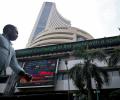
Indian benchmark indices, Sensex and Nifty, saw early gains, primarily driven by IT stocks, amidst expectations of a less aggressive monetary policy from the US Federal Reserve following softer inflation data. Global market trends and upcoming Q1 results are also influencing investor sentiment. Track Sensex, Nifty on july 16.

'Banking is the only sector that can see double-digit growth in FY27.'

Commercial banks in India recorded their highest credit growth in two years, accelerating to 18.6 per cent year-on-year by June 27, while also mobilising nearly 7 trillion in deposits, marking the third-highest fortnightly deposit growth in 29 years.
Indian benchmark indices, Sensex and Nifty, experienced a significant downturn as escalating tensions in West Asia led to a sharp surge in crude oil prices, coupled with fresh foreign fund outflows and a weakening rupee.

Indian stock markets witnessed a significant rally, with the Sensex climbing 964.58 points and the Nifty reaching 24,330, driven by strong buying in blue-chip stocks, particularly in the IT and banking sectors, amidst optimism over Q1 earnings and a shift towards large-cap investments.

Global semiconductor giant AMD projects the overall market for compute infrastructure, driven by artificial intelligence, to reach USD 2 trillion by 2030 from USD 365 billion in 2025. The company unveiled new products and its Helios AI infrastructure, emphasising an open ecosystem and significant performance gains over competitors, with India playing a key role in its global rollout.
Global semiconductor giant AMD projects the overall market for compute infrastructure, driven by artificial intelligence, to reach USD 2 trillion by 2030 from USD 365 billion in 2025. The company unveiled new products and its Helios AI infrastructure, emphasising an open ecosystem and significant performance gains over competitors, with India playing a key role in its global rollout.

How did hundreds of errors slip through multiple stages of drafting, editing, proofreading, expert review and final approval before making their way into classrooms?
Indian benchmark indices Sensex and Nifty saw a significant rebound in early trade, driven by softer-than-expected US inflation data which has reinforced expectations of a less aggressive monetary policy stance from the Federal Reserve, providing relief to global risk assets.

The Department of Space has directed that requests for voluntary retirement or resignation from Group 'A' Scientific and Technical personnel associated with the prestigious Gaganyaan human spaceflight programme and other important missions should not be accepted as a matter of routine.

The Indian stock market's trajectory this week will be significantly influenced by crude oil prices, global market trends, and the commencement of the corporate earnings season, with IT major TCS set to announce its June-quarter results on July 9.

SBI Funds Management, India's largest asset management company, has set its IPO price band between 545 and Rs 574 per share, valuing the company at 1.2 trillion. The management explained the 'moderate' valuation aims to instil investor confidence amidst market uncertainty, while also highlighting plans for AI integration, expansion into GIFT City, and new alternative investment funds.

It, however, conceded that 20 per cent blending of ethanol with petrol leads to 3-5 per cent lower mileage in vehicles than conventional petrol, but said the blend offers a significantly higher octane rating, superior anti-knock properties, faster combustion, better pickup, smoother acceleration, and cleaner engine operation.

Indian benchmark indices, Sensex and Nifty, closed lower due to profit-taking after a four-day rally, influenced by weakness in Asian markets, with Trent shares tumbling over 12 per cent.

Indian benchmark indices, Sensex and Nifty, staged a moderate rebound after a significant correction in the previous session, driven by foreign fund inflows and a largely positive trend in global markets, though geopolitical tensions between the US and Iran continued to foster caution.
Indian benchmark indices Sensex and Nifty extended their winning streak to a fourth consecutive day, driven by strong buying in blue-chip bank stocks and a decline in global crude oil prices. Fresh foreign fund inflows also contributed to the optimistic sentiment in the domestic equity market.

International mutual fund schemes have seen a significant resurgence in investor interest, attracting approximately Rs 7,600 crore in net inflows over the past year, a stark reversal from previous outflows, driven by their strong outperformance against domestic markets and limited AI-linked investment opportunities in India.

Indian benchmark indices, Sensex and Nifty, rebounded in early trade after two days of decline, driven by positive global market trends and strong buying in auto stocks. This recovery follows a robust performance in US markets and a rally in Asian markets, particularly Japan's Nikkei, fueled by AI-driven technology optimism. Track Sensex, Nifty on July 1.

90 per cent of institutions recorded no improvement in international student metrics, despite government initiatives such as the Study in India programme, UGC regulations on internationalisation, and efforts to attract foreign students.
Indian benchmark equity indices, Sensex and Nifty, extended their winning streak for a third consecutive day, driven by a rally in IT stocks and global cues suggesting a more accommodative monetary policy after softer-than-expected US jobs data.
Indian benchmark indices, Sensex and Nifty, bounced back significantly after two days of losses, with the Sensex climbing 443.97 points to settle at 76,922.64, driven by positive global market trends and a drop in crude oil prices.

Indian benchmark stock indices, Sensex and Nifty, declined for a second consecutive day, primarily due to selling pressure in IT, oil & gas, and select banking shares. Concerns over the US-Iran negotiations and a sluggish monsoon further dampened market sentiment.
Smallcap funds give investors access to businesses that can grow much faster than the broader economy.

IT stocks had their worst first half fall in decades, with the Nifty IT index declining 31% in the January-June 2026 period, its biggest decline in the first six months of a calendar year since 2003.

'The position of Karachi depicted at that time and the intense rivalry among the factional overlords in Lyari is very close to reality.'

Indian stock market benchmark indices Sensex and Nifty closed nearly one per cent higher, extending their winning streak for a second day. This rally was driven by softening crude oil prices, positive geopolitical developments, and significant buying in blue-chip IT stocks, despite a broader global tech sell-off.

The FIFA World Cup in Vancouver has intensified concerns among locals regarding increased policing and displacement of homeless individuals and drug users. Residents report more aggressive sweeps and confiscation of belongings, despite city officials stating these are routine operations and not directly influenced by the tournament.
